
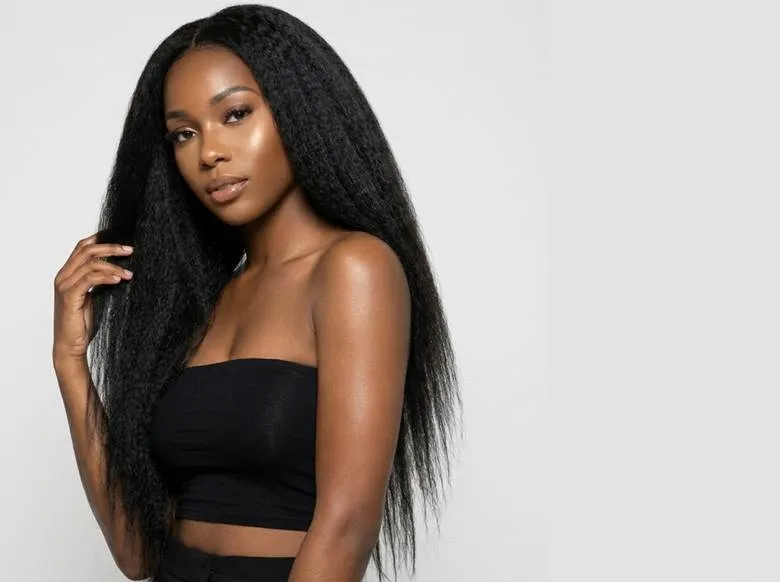
One of the most common questions before buying textured straight extensions is surprisingly simple: how many bundles do you actually need? The answer matters because too little hair can leave an install looking sparse, while too much can create unnecessary bulk and make blending more difficult. The ideal amount depends on more than just personal preference. Length, head size, installation technique, leave-out, and whether you are adding a closure or frontal can all influence how much hair is needed. Because kinky straight textures already have noticeable body and dimension, they can often create a fuller appearance with fewer bundles than very sleek straight textures. Understanding these details before ordering can help you create an install that feels balanced, moves naturally, and complements your own hair rather than overpowering it.
Start With the Natural Fullness of Kinky Straight Hair
Textured and natural-looking hair tends to create more visual density because every strand does not lie completely flat against the next. That is one reason Kinky Straight Human Hair Bundles can produce a beautifully full result without requiring excessive amounts of hair. Their soft, blown-out appearance gives the finished style body while still allowing the extensions to move naturally.
For many standard sew-ins, two to three bundles may be enough for shorter and medium lengths, while longer styles often benefit from three or more. The reason is simple: longer bundles generally contain the same total hair weight, but that hair is distributed across longer strands. As the length increases, the ends can appear less dense, so adding another bundle helps maintain fullness from the roots through the bottom of the style.
A helpful starting point is:
● 10–14 inches: approximately 2 bundles for a naturally full look.
● 16–20 inches: approximately 2–3 bundles.
● 22–26 inches: approximately 3 bundles, or more if you prefer dramatic density.
● Extra-full styles: consider adding one additional bundle regardless of length.
Consider Your Head Size, Leave-Out, and Installation Method
Bundle recommendations are useful guidelines, but every install is different. Someone with a smaller head may not need as many wefts as someone with a larger head circumference. Your stylist’s technique also matters. Closely spaced tracks can accommodate more hair, while a lighter installation with more space between tracks may require less.
Your natural hair can also contribute considerably to the finished volume. For women who regularly wear textured, stretched, or coily styles, extensions should complement rather than compete with their own density. A similar principle applies when using options such as 4c Hair Extensions Clip In, where the goal is often to enhance existing fullness while maintaining the character of natural hair.
Leave-out is another important consideration. If you plan to keep out a generous section around the crown or perimeter, your own hair will provide some of the coverage and volume. A minimal-leave-out installation, however, may require more extension hair to achieve the same balanced appearance.
Closures and Frontals Can Change How Many Bundles You Need
A closure or frontal covers part of the scalp that would otherwise need to be filled with wefts, so it can reduce the number of bundles required. A closure usually covers a smaller area at the top of the head, while a frontal extends farther across the hairline. Because of that difference, frontal installations may need fewer tracks around the front portion of the head.
For example, someone creating a shoulder-length style with a closure may find that two bundles provide enough volume. The same length installed without a closure could require additional hair depending on the amount of leave-out and desired density. With longer hair, a closure plus three bundles is often a comfortable starting point because it provides coverage while helping the ends remain full.
The objective should not simply be fitting the maximum number of bundles onto the head. Too many wefts can make a textured straight installation feel heavy and unnecessarily thick. A well-planned install should maintain movement, allow easy styling, and create believable density from every angle.
Choose Fullness Based on the Look You Actually Want
“Full” does not mean the same thing to everyone. Some women prefer a realistic everyday finish that resembles naturally dense blown-out hair, while others love a more glamorous style with extra volume. Think about your final look before deciding how many bundles to purchase instead of automatically assuming that more hair will create a better result.
If you want a polished but natural finish, begin with the recommended quantity for your chosen length. If you prefer fuller ends, big curls, or layered styling, purchasing an additional bundle can give your stylist more flexibility. It is often easier to have a little extra hair available than to discover halfway through an installation that additional fullness is needed.
You should also consider your planned styling routine. Straightened styles may visually compress the texture and look slightly less voluminous, while flexi-rod sets, curls, and soft waves can make the same amount of hair appear considerably fuller. Your hairstylist can help determine the right balance based on your preferred finished style.
The Beauty Bottom Line
For most kinky straight installations, two to three bundles provide a strong starting point, with longer lengths and extra-full styles generally requiring more hair. Your head size, installation method, leave-out, and the use of a closure or frontal should all be considered before making the final decision.
The best install is not necessarily the one with the most bundles. It is the one where the texture, density, length, and placement work together naturally. By planning your bundle count around the style you want instead of relying on a single universal rule, you can achieve a finish that looks beautifully full without becoming bulky, heavy, or difficult to maintain.